
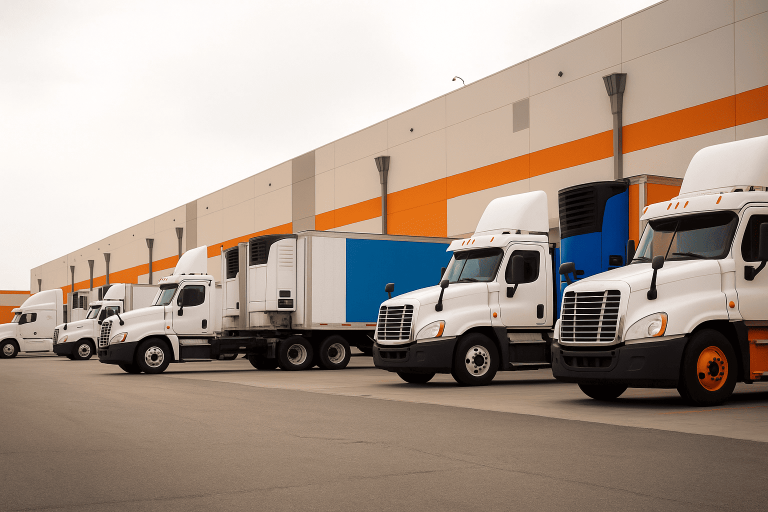
Effective distribution depends not only on transportation routes and warehouse performance but also on what happens in the yard. Yard logistic planning helps bridge the gap between inbound and outbound movement, ensuring that trailers, drivers, and dock doors are aligned with overall distribution goals. With solid planning in place, businesses can avoid bottlenecks, minimize delays, and better support customer demands.
Aligning Yard Operations with Distribution Strategy
Yard operations are often treated as a separate function, but they directly impact how quickly and accurately goods are distributed. If trailers are delayed at gates, misplaced in the yard, or held too long at docks, it affects delivery schedules and supply chain flow.
By incorporating yard logistic planning into the broader distribution strategy, companies create a more unified process. This involves mapping out trailer movements, defining priority handling for different freight types, and synchronizing yard activities with order fulfillment and shipping timelines.
Key Elements of Yard Logistic Planning
A structured yard logistic plan considers the daily rhythm of a distribution center. It includes trailer scheduling, gate assignment rules, yard layout mapping, and contingency planning for peak hours or unexpected events.
Planners need visibility into current trailer status—whether loaded, empty, waiting for inspection, or ready for dispatch. A real-time yard management system supports this by displaying all trailer activities and enabling quick decisions.
Additionally, planning must account for staffing. Yard jockey availability, gate operators, and communication with warehouse teams all influence how smoothly things run. A good yard logistic plan ensures the right personnel are in place and know what tasks are assigned throughout the shift.
Supporting Faster Turnarounds and Load Accuracy
Speed and accuracy are two main metrics for successful distribution. Yard logistic planning directly contributes to both by eliminating wasted motion and ensuring that trailers are moved only when necessary and always to the correct locations.
With clear visibility, trailers don’t sit idle while dock doors are available. Yard teams can move freight in the order required for dispatch, supporting last-mile delivery timelines and route optimization.
Load accuracy also improves when yard plans reduce congestion and provide clear instructions for handling different types of cargo. Misloads, missed pickups, or delays due to confusion can be minimized with better planning.
Integrating Yard and Transportation Functions
Yard logistic planning connects directly with transportation planning. When dispatchers know which trailers are ready and where they’re located, they can assign drivers and schedule departures more efficiently. Planners can also prioritize time-sensitive shipments, ensuring that perishable or high-value goods are always processed on time.
This integration means fewer scheduling conflicts, improved carrier performance, and better communication between in-house teams and third-party providers.
Tools That Support Yard Planning
Several tools aid in creating and executing effective yard logistic plans. Yard management systems provide real-time data and automation for trailer movements. Digital gate systems help schedule arrivals and reduce congestion. Communication platforms enable fast coordination between dock and yard teams.
Together, these tools give planners more control and flexibility to meet distribution targets.
Conclusion
Yard logistic planning is a foundational element of modern distribution success. By focusing on trailer flow, gate activity, personnel coordination, and technology integration, organizations can ensure their yards are ready to support fast, reliable freight movement. A well-planned yard is not just a storage space—it’s a vital part of the supply chain that drives timely and accurate distribution.
